This is awesome with whatever you have on hand – regular lemons, Meyer lemons, and white vinegar can be swapped out for the balsamic, although I typically make it as written.
1 clove garlic or small shallot
Sea salt & pepper to taste
1 tsp Dijon mustard
2 T. balsamic vinegar
6 T. olive oil
Mash garlic, add the vinegar, mustard and pepper. Let stand 10 minutes. Add oil and emulsify – hand mash – or whirr in a little blender. I add some lemon zest before serving. Makes 1/2 cup. Store in a tight sealing jar up to a week.
Recipes * Critters * Garden * Stories *
Sunday, May 22, 2016
Great Spice Company
We discovered a great place to get specialty spices and interesting combinations. There’s an awesome website with all sorts of tips on how to season, and you can buy in large or small quantities. https://www.spicejungle.com
We tried a Hickory Sea Salt, because we are trying to duplicate the intense flavor for the jerkey we love most without having a smoker. It was out of this world. So the other night we tried it on baked chicken thighs.
{So about the 1500 mg of salt a day thing: we think by removing a lot of salt from the foods by making fresh, a little sprinkled on top won’t hurt.}
We tried a Hickory Sea Salt, because we are trying to duplicate the intense flavor for the jerkey we love most without having a smoker. It was out of this world. So the other night we tried it on baked chicken thighs.
{So about the 1500 mg of salt a day thing: we think by removing a lot of salt from the foods by making fresh, a little sprinkled on top won’t hurt.}


Fresh Beet Salad
A restaurant in town had a fresh beet salad that was delicious. I had actually never eaten fresh beets - I don't like them pickled from the jar and didn't know they were prepared another way. Silly me.
This salad had a delicious, smooth texture of the roasted beets, coupled with the lighter goat cheese chive mousse flavor, fresh greens with balsamic honey dressing...I really couldn't get over it. There were 4 (whole) beets per plate (2 red/2 golden) with a mound of Argula and Quinoa to the side drizzled with dressing and garnished with honey roasted almonds.
I brought together some different recipes here. It's mostly to give you an idea - but it is not perfected. Maybe you can do that and send it to me. This could easily be a veggie main entrée with some fresh bread and a cup of soup.
Ingredients.
Roasted beets
Argula salad mixed greens
Honey roasted almonds
Quinoa
Goat Cheese mousse
Balsamic honey dressing
Roasting the beets
You'll want to pick beets the same size, about 1 - 2". Heat oven to 400. Make an aluminum foil pocket and seal the beets together inside in a single layer. Bake on center rack for 40 minutes. Cool slightly and rub with a paper towel to remove the peel. If it doesn't come off easily, return to the oven for 10 minutes more (the beets aren't done). Once they're peeled, trim one end flat for the base and chill.
This salad had a delicious, smooth texture of the roasted beets, coupled with the lighter goat cheese chive mousse flavor, fresh greens with balsamic honey dressing...I really couldn't get over it. There were 4 (whole) beets per plate (2 red/2 golden) with a mound of Argula and Quinoa to the side drizzled with dressing and garnished with honey roasted almonds.
I brought together some different recipes here. It's mostly to give you an idea - but it is not perfected. Maybe you can do that and send it to me. This could easily be a veggie main entrée with some fresh bread and a cup of soup.
Ingredients.
Roasted beets
Argula salad mixed greens
Honey roasted almonds
Quinoa
Goat Cheese mousse
Balsamic honey dressing
Roasting the beets
You'll want to pick beets the same size, about 1 - 2". Heat oven to 400. Make an aluminum foil pocket and seal the beets together inside in a single layer. Bake on center rack for 40 minutes. Cool slightly and rub with a paper towel to remove the peel. If it doesn't come off easily, return to the oven for 10 minutes more (the beets aren't done). Once they're peeled, trim one end flat for the base and chill.
Safe Storage in the Fridge & Freezer
One of the hardest things to gauge is when thawed meats are still good if we don’t get around to cooking them right away. It’s not so much a guessing game.
 Diane is the manager of the USDA’s Meat and Poultry Hotline. The Hotline is a toll-free telephone service that is available year round, Monday through Friday, to answer your questions about meat, poultry, and egg products. They receive over 80,000 calls a year from people like you who want to know how to prepare and store these foods safely. They also answer questions online at AskKaren.gov.
On behalf of everyone in government who works to keep your food safe, welcome to the FoodSafety.gov blog! By Diane Van, USDA’s Food Safety and Inspection Service
Diane is the manager of the USDA’s Meat and Poultry Hotline. The Hotline is a toll-free telephone service that is available year round, Monday through Friday, to answer your questions about meat, poultry, and egg products. They receive over 80,000 calls a year from people like you who want to know how to prepare and store these foods safely. They also answer questions online at AskKaren.gov.
Most common questions.
How long can I keep meat in the refrigerator?
What would we do without our refrigerators! When it comes to appliances that keep our foods safe, the refrigerator may be the most important because it slows down the growth of bacteria that cause food poisoning. At temperatures between 40 and 140 °F, bacteria grows most rapidly. That’s why we call this temperature range “the Danger Zone.”
A refrigerator set to 40 °F or below will protect most foods – but not forever. The cool temperatures slow down bacterial growth but they don’t stop the growth completely. So, it’s important to use food in a timely fashion to help maintain freshness and quality. Over time, even chilled foods will spoil.
2 Hr Sandwich Bread: Serve with a Side of Soup
A friend shared some old Cooks Magazines and I’ve been enchanted by them. Not only do they have great recipes and tips, the chefs and bakers go through their failed attempts before coming up with the final recipe. That is so helpful.
Our family loves the no-knead Artisan bread recipe that takes 17 hours (mostly rise time), and has a showy appearance and a thick and flavorful all-around crust similar to sourdough. I couldn’t imagine a bread recipe could rise, rest, rise again and bake all in 2 hours. But it did.
 2 c. bread flour plus 6 Tablespoons whole wheat flour
2 1/4 teaspoons rapid rise yeast (or instant)
1 1/4 cups warm water (not cold)
2 T. butter
1 T. organic honey
1/8 t. pepper or other seasonings to taste
3/4 t. salt
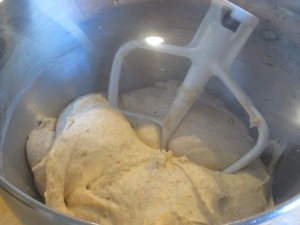
 In a stand mixer you’ll be using the paddle mixer, not the bread hook or the whisk. Mix bread flour, whole wheat flour and yeast together. Add the warm water and the melted butter and honey and mix on low speed for 1 minute. Increase it to medium and mix for 2 more minutes.
Scrape down the bowl and paddle with a rubber spatula and mix it on medium another 2 minutes. Scrape down again, detach from the machine and leave the paddle standing in the batter. Cover in saran wrap, place in a warm spot and let rise until it’s double in size, about 20 minutes.
2 c. bread flour plus 6 Tablespoons whole wheat flour2 1/4 teaspoons rapid rise yeast (or instant)
1 1/4 cups warm water (not cold)
2 T. butter
1 T. organic honey
1/8 t. pepper or other seasonings to taste
3/4 t. salt
In a stand mixer you’ll be using the paddle mixer, not the bread hook or the whisk. Mix bread flour, whole wheat flour and yeast together. Add the warm water and the melted butter and honey and mix on low speed for 1 minute. Increase it to medium and mix for 2 more minutes.Scrape down the bowl and paddle with a rubber spatula and mix it on medium another 2 minutes. Scrape down again, detach from the machine and leave the paddle standing in the batter. Cover in saran wrap, place in a warm spot and let rise until it’s double in size, about 20 minutes.
Homemade Version of Chinese Chicken Salad
Fresh and Easy

1/2 package chow mein noodles
1/2 head of lettuce, sliced in strips
1/2 head shredded green cabbage
3 c. cut up and seasoned cooked chicken
1 medium carrot, slivered
4 green onions, thinly sliced
1 T. sesame seeds
mandarin oranges and slivered almonds for garnish
Prep salad, cover with plastic wrap and refrigerate.
DRESSING
1/3 c. oil
1/4 c. vinegar
1 T. sugar (or sugar substitute)
2 tsp low sodium soy sauce
1/2 tsp pepper
1/2 tsp ginger
1/4 tsp salt (we leave it out)
Combine everything but the oil and whisk vigorously as you slowly add the oil – or drizzle in a stand mixer so it blends well. Refrigerate an hour or more to blend the flavors.
To serve: Pour a modest amount of dressing with the salad, garnish and serve with additional dressing on the side.
The Ring Theory
 This is from the Los Angeles Times, from April 07, 2013 – written by the brilliant Susan Silk and Barry Goldman
This article is my go-to place in all sorts of situations when you want to help but don’t know how. I hope you enjoy the great tips and insight. -n
When Susan had breast cancer, we heard a lot of lame remarks, but our favorite came from one of Susan’s colleagues. She wanted, she needed, to visit Susan after the surgery, but Susan didn’t feel like having visitors, and she said so. Her colleague’s response? “This isn’t just about you.”
“It’s not?” Susan wondered. “My breast cancer is not about me? It’s about you?”
The same theme came up again when our friend Katie had a brain aneurysm. She was in intensive care for a long time and finally got out and into a step-down unit. She was no longer covered with tubes and lines and monitors, but she was still in rough shape. A friend came and saw her and then stepped into the hall with Katie’s husband, Pat. “I wasn’t prepared for this,” she told him. “I don’t know if I can handle it.”
This woman loves Katie, and she said what she did because the sight of Katie in this condition moved her so deeply. But it was the wrong thing to say. And it was wrong in the same way Susan’s colleague’s remark was wrong.
Susan has since developed a simple technique to help people avoid this mistake. It works for all kinds of crises: medical, legal, financial, romantic, even existential. She calls it the Ring Theory.
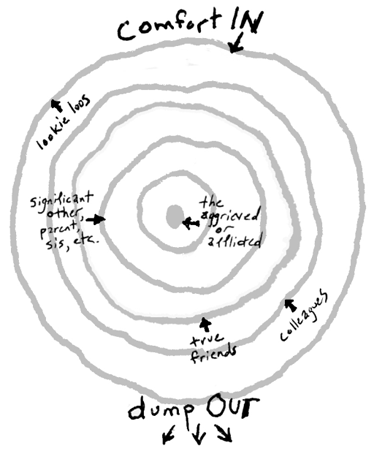
Draw a circle. This is the center ring. In it, put the name of the person at the center of the current trauma. For Katie’s aneurysm, that’s Katie. Now draw a larger circle around the first one. In that ring put the name of the person next closest to the trauma. In the case of Katie’s aneurysm, that was Katie’s husband, Pat. Repeat the process as many times as you need to. In each larger ring put the next closest people. Parents and children before more distant relatives: intimate friends in smaller rings, less intimate friends in larger ones. When you are done you have a Kvetching Order. One of Susan’s patients found it useful to tape it to her refrigerator.
Here are the rules.
The person in the center ring can say anything she wants to anyone, anywhere. She can kvetch and complain and whine and moan and curse the heavens and say, “Life is unfair” and “Why me?” That’s the one payoff for being in the center ring.
Everyone else can say those things too, but only to people in larger rings.
When you are talking to a person in a ring smaller than yours, someone closer to the center of the crisis, the goal is to help. Listening is often more helpful than talking. But if you’re going to open your mouth, ask yourself if what you are about to say is likely to provide comfort and support. If it isn’t, don’t say it. Don’t, for example, give advice. People who are suffering from trauma don’t need advice. They need comfort and support. So say, “I’m sorry” or “This must really be hard for you” or “Can I bring you a pot roast?” Don’t say, “You should hear what happened to me” or “Here’s what I would do if I were you.” And don’t say, “This is really bringing me down.”
If you want to scream or cry or complain, if you want to tell someone how shocked you are or how icky you feel, or whine about how it reminds you of all the terrible things that have happened to you lately, that’s fine. It’s a perfectly normal response. Just do it to someone in a bigger ring.
Comfort IN, dump OUT.
There was nothing wrong with Katie’s friend saying she was not prepared for how horrible Katie looked, or even that she didn’t think she could handle it. The mistake was that she said those things to Pat. She dumped IN.
Complaining to someone in a smaller ring than yours doesn’t do either of you any good. On the other hand, being supportive to her principal caregiver may be the best thing you can do for the patient.
Most of us know this. Almost nobody would complain to the patient about how rotten she looks. Almost no one would say that looking at her makes them think of the fragility of life and their own closeness to death. In other words, we know enough not to dump into the center ring. Ring Theory merely expands that intuition and makes it more concrete: Don’t just avoid dumping into the center ring, avoid dumping into any ring smaller than your own.
Remember, you can say whatever you want if you just wait until you’re talking to someone in a larger ring than yours.
St. Paddy's Shepherd's Pie
 I know, I don’t eat lamb, either, not until now. We are In Search Of low salt meals and corned beef isn’t quite on the menu yet, and St. Paddy’s Day needed some sort of traditional Irish meal, and that is how the idea of a Shepherd’s Pie came up.
Alton Brown is my go-to-guy - he taught me how to temper an egg so the macaroni and cheese sauce smoothly blends and clings just perfectly - and I had been trying to learn that for years.
And then there's the humor. He says: “I’ve always been a fan of shepherd’s pie — a cottage pie containing ground shepherd. In the event that a shepherd is not available, mutton or lamb may be used.”
We tried it on March 17th. Well, actually we made it on the 17th but there was chicken that needed to be cooked, so it sat overnight in the fridge for the next day. It goes together in a snap. You can make the filling and let it sit until dinner when you do the mashers and bake it whenever.
So then we tried it on the 25th, and the next month on the 7th, and again in May for guests on the 15th.
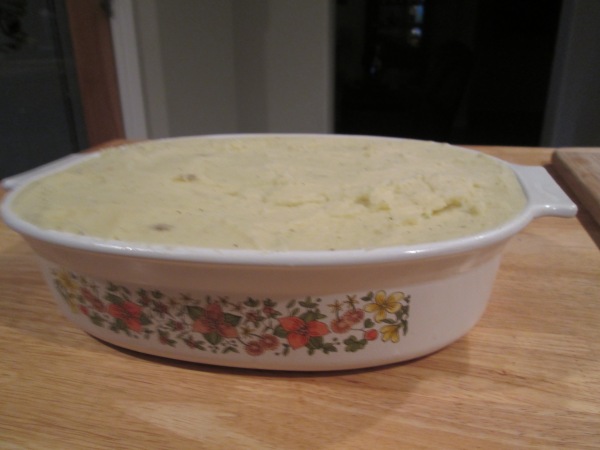
The recipe is killer good.
Phase 2: Devising a Welcome Mat

Here is what the pathetic front yard looked like after spending more money than I care to admit having it put in. Best we can figure, it wasn't properly prepared. We should have realized when the landscaper suggested we water it 90 minutes twice a day ... honestly, anything would grow with 3 hours of water. What a ridiculous waste of natural resources.
 So we (read I) came up with a plan for the front space becoming more hospitable to our winged cohabitants, namely the bees / butterflies / hummingbirds. We are very concerned about the bees. Every February or March we see truckloads of beehives carted in to pollinate the almond trees. They can’t precisely predict when the trees will bloom, so the bees come in and wait sometimes a week or more for food. The hungry bees are all over our place – you hear a loud drone of buzzing in our Italian Cypress trees from the porch and they hover over wild grasses looking for flowers. They're starving.
 Bees have it hard. We percolated on this a while and an idea hatched to contour the ground with topsoil, add natural elements like rock and tanbark and flagstone walkways and plant a variety of perennial flowering shrubs they love, including ground cover, wildflowers and herbs. Toss out a welcome mat for them, but do it in as natural a way as possible to tie in to the surrounding fields.
 I'm a constantly surprised Idea Person so the actual follow through is always ALWAYS a shocker -- whoa! this is a lot of work! this is taking way more time than I expected! look at the cost! I'm the LETSDOIT gal.
 I conducted some official research (meaning I looked at pictures online) and came up with a 'sort of' plan. We will reuse the irrigation system. It needs to look purposefully random, but it is hard to explain that to our landscaper, a 76 Basque immigrant who lives in the concrete world of absolutes and has limited English. Nevertheless his crew moved around the mountain of topsoil and will be moving around two more mountains of rock, all the heavy stuff we can't do. Then we're on our own to achieve the goal.
 I am nervous the Hubs won't like it, and I am nervous it will need a lot of tending, but still jumped in with both feet. Juan scraped off the grass and rototilled it. They wheel barrowed 20 yards of topsoil around, and there's 80 tons of rock to go.
Hey it's only a 5,000 sq ft space. Easy peasy. Pity the Hubs, do.
So we (read I) came up with a plan for the front space becoming more hospitable to our winged cohabitants, namely the bees / butterflies / hummingbirds. We are very concerned about the bees. Every February or March we see truckloads of beehives carted in to pollinate the almond trees. They can’t precisely predict when the trees will bloom, so the bees come in and wait sometimes a week or more for food. The hungry bees are all over our place – you hear a loud drone of buzzing in our Italian Cypress trees from the porch and they hover over wild grasses looking for flowers. They're starving. Bees have it hard. We percolated on this a while and an idea hatched to contour the ground with topsoil, add natural elements like rock and tanbark and flagstone walkways and plant a variety of perennial flowering shrubs they love, including ground cover, wildflowers and herbs. Toss out a welcome mat for them, but do it in as natural a way as possible to tie in to the surrounding fields. I'm a constantly surprised Idea Person so the actual follow through is always ALWAYS a shocker -- whoa! this is a lot of work! this is taking way more time than I expected! look at the cost! I'm the LETSDOIT gal. I conducted some official research (meaning I looked at pictures online) and came up with a 'sort of' plan. We will reuse the irrigation system. It needs to look purposefully random, but it is hard to explain that to our landscaper, a 76 Basque immigrant who lives in the concrete world of absolutes and has limited English. Nevertheless his crew moved around the mountain of topsoil and will be moving around two more mountains of rock, all the heavy stuff we can't do. Then we're on our own to achieve the goal. I am nervous the Hubs won't like it, and I am nervous it will need a lot of tending, but still jumped in with both feet. Juan scraped off the grass and rototilled it. They wheel barrowed 20 yards of topsoil around, and there's 80 tons of rock to go. Hey it's only a 5,000 sq ft space. Easy peasy. Pity the Hubs, do.
Our Go-To Meatball Recipe
This is an absolutely wonderful meatball recipe that we modified for ourselves.
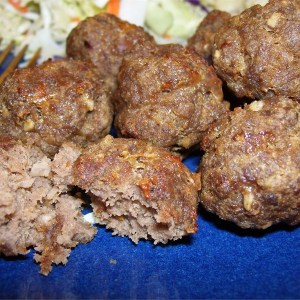
3/4 lbs lean ground beef
1 1/2 lbs lean ground turkey
In a large mixing bowl combine with:
2 beaten eggs (or substitute eggbeaters)
4 cloves of minced garlic
1 T. Worcestershire
3/4 c bread crumbs — add or subtract as needed
1/2 c. chopped onion
2 T. bottled yellow mustard
2 teaspoon red pepper flakes
2 teaspoon Cajun seasoning
Form into 1 or 1 1/2″ meatballs
Spray baking sheets liberally with cooking spray; Bake 370 for 15 minutes. Reserve juice to add to spaghetti sauce. They freeze beautifully. Makes about 30.
From Bearnesta, AllRecipes. http://allrecipes.com/recipe/72595/the-best-meatballs-youll-ever-have/photos/63324/
Dinner the Long Way
As I munch on 100 calorie popcorn and wonder about dinner, the telltale signs of fatigue are setting in. After the first big burst of 10-15 lbs we are fighting to keep it off. I eye the treadmill every day but haven’t climbed on. I do dust it, though.
I’m not gonna lie. The new food that I want to have tons of flavor and fun to eat takes more time and research to put the meal together. And those lazy dieters just blew it off all weekend, so here is Tuesday with no plan and the need for meals from scratch.
Low Everything meals don’t speed from idea to execution. Last night’s dinner was an impromptu toss up chicken breast marinated and baked with Mediterranean spices, balsamic vinegar, and served with a side salad and whipped squash. Bleh. I am clearly not ready for a shoot-from-the-hip impromptu menu yet.
I'm kind of missing the old days of opening a can of chili, tossing in a cup of cooked pasta and serving with a side of greens in under 15 minutes, except for the indigestion.
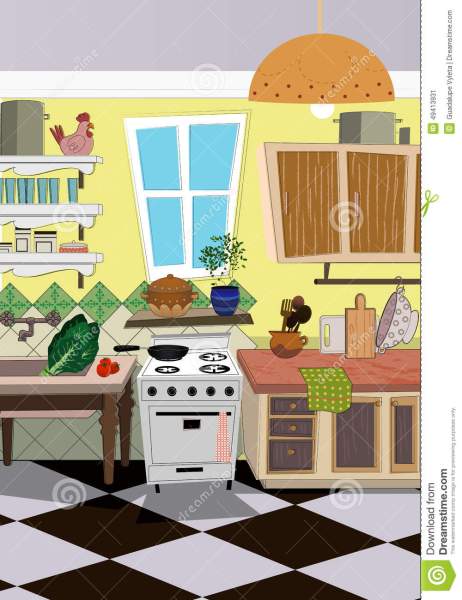
 The kitchen is a happy space with the four-legged taste testers trailing around waiting for a carrot or a crust of bread. It is their job. They take it seriously. We have a checkerboard floor.
The Hubs makes his rounds to see where the good smells are coming from. He’s interested in seasonings and flavors, and we build recipes together. He likes to cook but having the menu set is key to keeping with it. Don’t get me wrong, we are moving forward with the new food groups. It’s just using new muscles with an already busy life.
I don’t know why we didn’t carve out time to shop for ingredients for the week, or slice up baked turkey for sandwiches. We had time to make salads and marinate meat for the fridge and plan out the week. I played around with bread instead, and created a tasty omelet.
Maybe it’s the death knoll of diets ~ not being organized. When the enthusiasm starts to wane and gives way to old habits because it’s convenient and you know all the shortcuts, and you talk yourself into believing one night won’t hurt.
Even with the Hubs' surgery, and believing wholly that what we eat is a matter of life and death, it's still hard! I truly believe we don’t have a choice if we are going to walk the walk ... and I think prepping is the key so the weekdays and busy weekend meals go together in a breeze. So tonight I’ll invest a little time to make it quick and convenient. Maybe even spend half an hour on the treadmill, you know, for solidarity. Maybe.
Low Everything meals don’t speed from idea to execution. Last night’s dinner was an impromptu toss up chicken breast marinated and baked with Mediterranean spices, balsamic vinegar, and served with a side salad and whipped squash. Bleh. I am clearly not ready for a shoot-from-the-hip impromptu menu yet.
I'm kind of missing the old days of opening a can of chili, tossing in a cup of cooked pasta and serving with a side of greens in under 15 minutes, except for the indigestion.
The kitchen is a happy space with the four-legged taste testers trailing around waiting for a carrot or a crust of bread. It is their job. They take it seriously. We have a checkerboard floor. The Hubs makes his rounds to see where the good smells are coming from. He’s interested in seasonings and flavors, and we build recipes together. He likes to cook but having the menu set is key to keeping with it. Don’t get me wrong, we are moving forward with the new food groups. It’s just using new muscles with an already busy life.
I don’t know why we didn’t carve out time to shop for ingredients for the week, or slice up baked turkey for sandwiches. We had time to make salads and marinate meat for the fridge and plan out the week. I played around with bread instead, and created a tasty omelet.
Maybe it’s the death knoll of diets ~ not being organized. When the enthusiasm starts to wane and gives way to old habits because it’s convenient and you know all the shortcuts, and you talk yourself into believing one night won’t hurt.
Even with the Hubs' surgery, and believing wholly that what we eat is a matter of life and death, it's still hard! I truly believe we don’t have a choice if we are going to walk the walk ... and I think prepping is the key so the weekdays and busy weekend meals go together in a breeze. So tonight I’ll invest a little time to make it quick and convenient. Maybe even spend half an hour on the treadmill, you know, for solidarity. Maybe.
Rock Fish

I have no idea about how long this fish has been in existence but we picked up a package by accident, sitting next to the fish we were going for and routinely buy.
Rock fish is meaty enough and sautés nicely in a little seasoned oil. No fishy taste at all, and flaky with very few bones (in our filets). It took just a few minutes per side and the flavor paired excellently with the whipped cauliflower/baked potato combo we make and a dab of butter.
Highly recommended that you give it a try.
Dirty Gloves
To get something big, you have to start small.
 Take old veggie scraps from your kitchen and garden, toss them into a composter, add twigs and leaves and a little water and turn it often and it magically becomes vitamin- and mineral- rich compost.
I love watching my gloves get dirty as the composted soil clings to them. Even castoffs have a purpose. The soil softens and smells peaty and rich, and I move the earthworms aside as preparations are underway for a deep base for the young roots to stretch out and grow.
 One by one the sown plants that lined your counter or the ones bought at the nursery are rehomed and marked and a drip line brought. You leave them, tiny and small, wondering how they will face the elements and birds and put a big stake next to them for good luck.
The sun comes, and sprouts — four leaves, eight, twelve, and then flowers. From the kitchen window you can watch the beds change from mostly brown soil to green as the little plants grow and then burst into bloom. To discourage the birds, you tie Mylar strips to the plants and give them some vitamin water during the growing season and some ladybugs for the pests. And then it’s a wait and watch.
 Some of them make it, most of them do. You imagine the harvest basket with something in it, and before you know it you’re knee deep in tomatoes and carrying a pail. You scour recipes to use them up. You send veggies to work and leave them with the postmistress for your neighbors.
In no time the pantry and freezer is taken over by jars with hand-printed labels. The family have become seasonal eaters without even realizing it.
Late in the fall, the garden crumbles and limbs drape over the walkways. The last veggies of the season are picked, and the plants head to the composter for next year. I sure love it here.
Take old veggie scraps from your kitchen and garden, toss them into a composter, add twigs and leaves and a little water and turn it often and it magically becomes vitamin- and mineral- rich compost.I love watching my gloves get dirty as the composted soil clings to them. Even castoffs have a purpose. The soil softens and smells peaty and rich, and I move the earthworms aside as preparations are underway for a deep base for the young roots to stretch out and grow.
One by one the sown plants that lined your counter or the ones bought at the nursery are rehomed and marked and a drip line brought. You leave them, tiny and small, wondering how they will face the elements and birds and put a big stake next to them for good luck.The sun comes, and sprouts — four leaves, eight, twelve, and then flowers. From the kitchen window you can watch the beds change from mostly brown soil to green as the little plants grow and then burst into bloom. To discourage the birds, you tie Mylar strips to the plants and give them some vitamin water during the growing season and some ladybugs for the pests. And then it’s a wait and watch.
Some of them make it, most of them do. You imagine the harvest basket with something in it, and before you know it you’re knee deep in tomatoes and carrying a pail. You scour recipes to use them up. You send veggies to work and leave them with the postmistress for your neighbors.In no time the pantry and freezer is taken over by jars with hand-printed labels. The family have become seasonal eaters without even realizing it.
Late in the fall, the garden crumbles and limbs drape over the walkways. The last veggies of the season are picked, and the plants head to the composter for next year. I sure love it here.
Phase 1: A More Edible Yard (or...taking the good with the bad)

There was this beautiful yard in front before the drought hit hard, and I have this hairbrained scheme to make it an edible yard. ‘Plan’ is too strong a word. I want to toss out some herbs and let them intermix and grow together into a massive tangle of unruly goodness, and gaze out at it from the living room window. There needs to be anchor plants, and wildflowers, and a hospitable environment for bees, hummingbirds and butterflies with tanbark and river rock to hold the weeds at bay.
There is a modest herb garden on the side yard that has basil, marjoram, oregano, mint, sage, thyme, rosemary and scallions. It’s enough for us, but a big plant of marjoram reduces to just a few jars of dried herbs for gift giving. Ask me how we know that.
 We are in CA Zone 9a, which says it should be ideal for a cool weather crop. Our first and only attempt at a winter garden of cabbage, kale, broccoli, cauliflower and brussel sprouts happened the year of an unusually hard, extended freeze and all was lost.
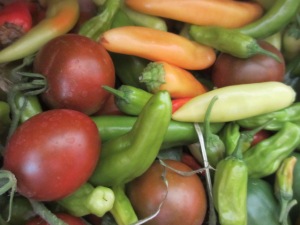
The summer garden thrives pretty much on its own if we provide regular water, compost and ladybugs. We’ve got what they call farmer’s soil, nutrient rich and the color of deep mocha. In it we have had success with pole beans, cucumbers, eggplants, melons, peppers (sweet and spicy), tomatillos, and thank God for that!
 Elsewhere there’s an artichoke, a couple of new boysenberry vines and a on-life-support nectarine twig/tree that we shamelessly neglect. That is on my list to nurse it back to health. It'll probably do fine if we actually water it. More of the property has established trees of several olives, two pomegranates and an old fig with lots of character that answers to the name Figaro.
We also have a colony of ground squirrels or maybe it should be called an army, so food can’t be planted the easy way, directly in the dirt. The garden is constructed with a ground layer of chicken wire, then raised beds, then walkway tan bark shredded from tree limbs, and finally a perimeter electrified fence. (Just kidding about the electrified part)
So far the enemy is not interested in herbs, and hope springs eternal for a dirt planting in the front yard that will not involve the roots being pulled down into the tunnels like a Bugs Bunny cartoon.
 The farmers just poison them, but we’ve got dogs to consider, and the hawks and owls who are our first priority. It is maddening to watch those cheeky devils sun themselves in the yard in full view of the window. We have flooded them, gassed them, and sealed them in. Those little buggers push the empty gas canisters out of the hole. I think they like it.
I picked up a humane trap but how does one reconcile the moral dilemma of turning them loose 8 miles away to become someone else’s problem? The worst part is knowing all winter they are underground breeding Borg reinforcements.
We are in CA Zone 9a, which says it should be ideal for a cool weather crop. Our first and only attempt at a winter garden of cabbage, kale, broccoli, cauliflower and brussel sprouts happened the year of an unusually hard, extended freeze and all was lost.The summer garden thrives pretty much on its own if we provide regular water, compost and ladybugs. We’ve got what they call farmer’s soil, nutrient rich and the color of deep mocha. In it we have had success with pole beans, cucumbers, eggplants, melons, peppers (sweet and spicy), tomatillos, and thank God for that!
Elsewhere there’s an artichoke, a couple of new boysenberry vines and a on-life-support nectarine twig/tree that we shamelessly neglect. That is on my list to nurse it back to health. It'll probably do fine if we actually water it. More of the property has established trees of several olives, two pomegranates and an old fig with lots of character that answers to the name Figaro. We also have a colony of ground squirrels or maybe it should be called an army, so food can’t be planted the easy way, directly in the dirt. The garden is constructed with a ground layer of chicken wire, then raised beds, then walkway tan bark shredded from tree limbs, and finally a perimeter electrified fence. (Just kidding about the electrified part)
So far the enemy is not interested in herbs, and hope springs eternal for a dirt planting in the front yard that will not involve the roots being pulled down into the tunnels like a Bugs Bunny cartoon.
The farmers just poison them, but we’ve got dogs to consider, and the hawks and owls who are our first priority. It is maddening to watch those cheeky devils sun themselves in the yard in full view of the window. We have flooded them, gassed them, and sealed them in. Those little buggers push the empty gas canisters out of the hole. I think they like it. I picked up a humane trap but how does one reconcile the moral dilemma of turning them loose 8 miles away to become someone else’s problem? The worst part is knowing all winter they are underground breeding Borg reinforcements.
Saturday, May 21, 2016
Pork Medallions with Whole Wheat Rotini
 Because the Hubs and I have decided not to *completely* live pasta-free, I was curious about the nutritional labels for the varieties of pasta available. I know at spots like Trader Joes and the Natural Foods Co-Op there are way more options, but this is what the local grocer had.
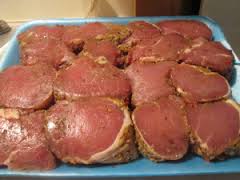
Each medallion is about 4 ozs. (There are around 16 medallions per package) They are pre seasoned and freeze beautifully, are lean and incredibly delicious and take minutes to prepare. They taste like you’ve fussed over them which is a big old fat lie.
For the Hubs’ birthday lunch we had Tuscan seasoned lean pork medallions with Rotini in olive oil, spices, a dab of low everything (LE) margarine, and a multi-lettuce & kale salad
It was interesting there wasn’t much difference between pastas.
Barilla Protein Plus Rotini, 14.5 oz box, 7 ample servings (multigrain pasta) – 3/4 c. per serving. This product discloses it contains wheat and eggs.
0g Cholesterol, 25mg Sodium, 38g Carbs, 17g Protein, 2g Fat, 190 Cal, 2 g Sugar, with a 9.5% fat to calorie ratio.
Barilla Veggie Rotini – 6 servings per 12 oz box – less than 3/4 c. per serving. This product discloses it contains wheat and possibly egg residue.I expected it to be a lot healthier because of the 25% zucchini and spinach.
0g Cholesterol, Omg Sodium, 41 g Carbs; 8g Protein; 200 Cal, 2 g Sugar, with a 5% fat to calorie ratio.
Now for the Raley’s brand, regular Rotini, largest box and cheapest price, 8 servings. 3/4 c serving – this product also discloses it contains wheat and possibly egg residue.
0g Cholesterol, 0mg Sodium, 42g Carbs, 7g Protein, 1g Fat, 200 Cal, 1g Sugar, 2g Fiber, and 5% fat to calorie ratio.
The pork medallions were from Costco. You can find them in the fresh meat section and they sell for $4.99 a lb. Costco makes them in-house, there is no nutritional info, but the USDA website estimates for 8 oz (2 beefy medallions) is = 282 calories, 46g protein, 8g fat. The Tuscan seasoning definitely has salt, so we added in 50mg of sodium per serving.
Pot Pie Heads
Man does not live by bread alone.
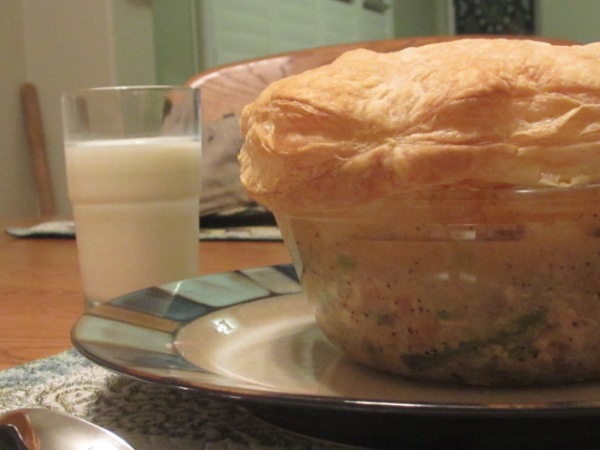
Heaven is leftover night when you can use up your favorite soup in a Chicken Pot Pie.
Heat your homemade soup full of veggies and potato – ours also had chicken but just veggies are fine, or turkey, or beef. Scoop out the veggies and meat so you can thicken the sauce.
Once the broth is very hot, ladle 8 ozs into another bowl and whisk in flour until there are no lumps and then pour it back into the soup pot and whisk it to blend. Let it cook a couple of minutes so you don’t get that floury taste, and repeat if you need thicker broth. {Another way to thicken soup is with leftover mashed potatoes or dry potato flakes. I’d like to try whipped cauliflower folded into some flour.}
This pot pie has a top crust, so re-combine everything and add a handful of peas and spoon the hot soup into 12 oz deep ramekins.
Place the puffed pastry dough on a lightly floured cutting board and roll it out a little bit. Cut circles 1″ larger (or more) than the diameter of the ramekins and place over the top and tuck over the sides. One box of puff pastry will easily cover 6 pot pies.
Bake in a 350 oven (or more) until the top puffs completely and it turns a light medium golden brown, about 30-35 minutes.
Nutritionally speaking, the soup doesn’t have much if it’s low in sodium / fat / carbs and sugars. The pastry top from 1 pot pie adds 280 g of sodium per serving, 0 cholesterol, 20 grams of fat, 3 g protein, and 16 g of carbs. But it’s a Pot Pie.
Snow Geese
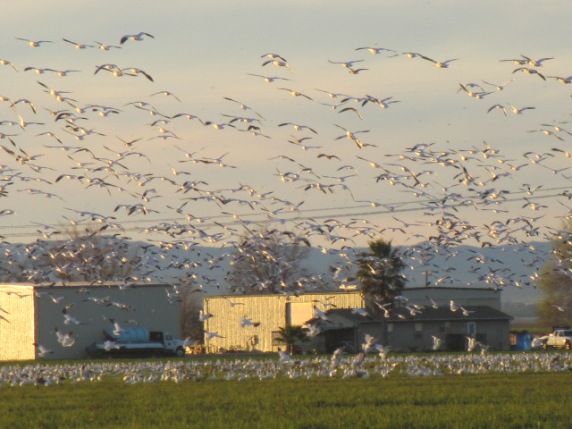
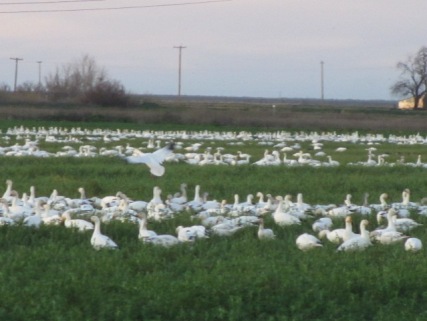
We spied these delightful squatters in a neighboring field on a Monday afternoon in February 2016.



Marking Thyme
Lots of times I’m in the kitchen and asking the Hubs to run out and pick some fresh herbs, and the Italian ones don’t look all that different from each other when the cute little garden markers are buried under full and draping limbs.
So this year I beefed it up and put out markers from stones, wood and brick from around the yard. Next year I’ll paint them, but this year I had a chiseled felt pen. We’ll be doing this with the vegetables, too.
(I tossed in the shadow of the gnarly old fig tree because it was just the right time of night)
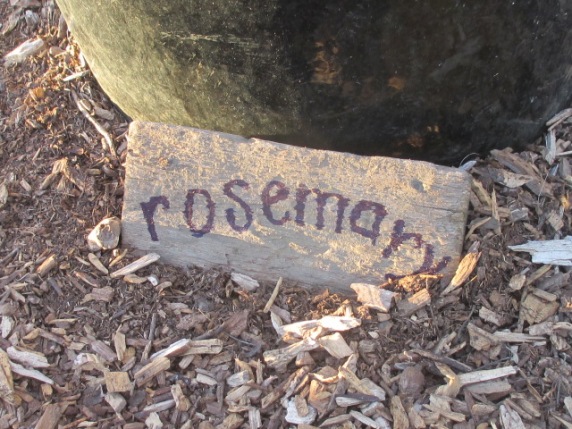
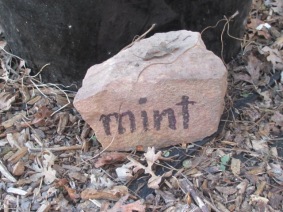


So this year I beefed it up and put out markers from stones, wood and brick from around the yard. Next year I’ll paint them, but this year I had a chiseled felt pen. We’ll be doing this with the vegetables, too.
(I tossed in the shadow of the gnarly old fig tree because it was just the right time of night)
You Can't Fight the Facts
Probably the biggest challenge with moving away from commercially preserved jars, cans and processed foods is stocking the house with what will take its place.
For us, it started with the garden. Eating fresh became part of the routine of every meal, first as a side dish – with salads, marinated veggies, baked and sautéed squash and eggplant — and then entrees such as homemade chile verde, stuffed squash and Tomatoes Deborah.
There was an overabundance of everything and it needed to be saved for fall and winter, so my first try was make sauces from the tomatoes. After coring them, they were tossed into a big stew pot 3/4 full sun warmed from the vine, skins and seeds and all. It cooked on low for an hour or so, and stirred every now and then. It cooks down pretty quick and there’s plenty of liquid.
The first few times the sauce was cooked, it was put through a juicer to separate the skins and most of the seeds for a super smooth watery sauce. I then pulverized the skins and seeds in the food processor and added it back into the sauce as a thickener because it doesn’t change the flavor and retains the extra antioxidant and nutritional value found in those parts. Nowadays, I just leave everything in the pot and if I want a finer texture I emulsify it right with a hand held emulsifier ($25, but oh so worth it).

An old friend taught me to always season meat before freezing it so it is marinating as it freezes and also as it thaws, and that’s true here, too. In a sauté pan soften up as much garlic, pepper and onion as you want in a ladle of the tomato liquid and then add it to the stewpot with a couple of bay leaves and other spices — we include pepper, Mrs. Dash table blend, fresh/dry marjoram, basil, thyme, rosemary, and oregano and a dash of red pepper flakes. Let the seasonings meld and that’s it: cool and store in quart canning jars in the freezer to use all year round.
I do keep a jar or two of non meat Classico Di Napoli Tomato & Basil spaghetti sauce in the pantry because we’re a ways from town. We find it very flavorful but even so, for a 24 oz jar that serves 5 it contains 430 mg of sodium per serving (2,150 mg overall). It also contains 6 grams of sugar. For a diet of 1500 g max of salt per day, that’s a problem.
The bulk food aisle is another easy place to cook fresh. The beans are easy to re-hydrate by soaking them in a bowl on the counter overnight or you can quicken the process by tossing them in a crockpot at a 3 x 1 water ratio and setting it on low for the day. 1/2 c of dry beans yields 2 cups of cooked. I like that you can make just what you need and there’s no fancy packaging to throw away.
It’s hard to fight the logic of starting there after reading the nutritional information. A 15 oz can of S&W white beans has 3.5 servings per 15 oz can and 480 mg of sodium per serving (that’s over 1,600 mg of sodium in a 15oz can). Compare that to the bulk aisle which costs the same and the beans are air dried on the vine or oven dried without the need for preservatives and color additives. The bulk aisle gives you fresher choices that are full of potassium and protein with no fat or cholesterol.
For us, it started with the garden. Eating fresh became part of the routine of every meal, first as a side dish – with salads, marinated veggies, baked and sautéed squash and eggplant — and then entrees such as homemade chile verde, stuffed squash and Tomatoes Deborah.
There was an overabundance of everything and it needed to be saved for fall and winter, so my first try was make sauces from the tomatoes. After coring them, they were tossed into a big stew pot 3/4 full sun warmed from the vine, skins and seeds and all. It cooked on low for an hour or so, and stirred every now and then. It cooks down pretty quick and there’s plenty of liquid.
The first few times the sauce was cooked, it was put through a juicer to separate the skins and most of the seeds for a super smooth watery sauce. I then pulverized the skins and seeds in the food processor and added it back into the sauce as a thickener because it doesn’t change the flavor and retains the extra antioxidant and nutritional value found in those parts. Nowadays, I just leave everything in the pot and if I want a finer texture I emulsify it right with a hand held emulsifier ($25, but oh so worth it).

An old friend taught me to always season meat before freezing it so it is marinating as it freezes and also as it thaws, and that’s true here, too. In a sauté pan soften up as much garlic, pepper and onion as you want in a ladle of the tomato liquid and then add it to the stewpot with a couple of bay leaves and other spices — we include pepper, Mrs. Dash table blend, fresh/dry marjoram, basil, thyme, rosemary, and oregano and a dash of red pepper flakes. Let the seasonings meld and that’s it: cool and store in quart canning jars in the freezer to use all year round.
I do keep a jar or two of non meat Classico Di Napoli Tomato & Basil spaghetti sauce in the pantry because we’re a ways from town. We find it very flavorful but even so, for a 24 oz jar that serves 5 it contains 430 mg of sodium per serving (2,150 mg overall). It also contains 6 grams of sugar. For a diet of 1500 g max of salt per day, that’s a problem.
The bulk food aisle is another easy place to cook fresh. The beans are easy to re-hydrate by soaking them in a bowl on the counter overnight or you can quicken the process by tossing them in a crockpot at a 3 x 1 water ratio and setting it on low for the day. 1/2 c of dry beans yields 2 cups of cooked. I like that you can make just what you need and there’s no fancy packaging to throw away.
It’s hard to fight the logic of starting there after reading the nutritional information. A 15 oz can of S&W white beans has 3.5 servings per 15 oz can and 480 mg of sodium per serving (that’s over 1,600 mg of sodium in a 15oz can). Compare that to the bulk aisle which costs the same and the beans are air dried on the vine or oven dried without the need for preservatives and color additives. The bulk aisle gives you fresher choices that are full of potassium and protein with no fat or cholesterol.
When It's Not Nothing
It’s been one for the books, this winter.
What started as a general feeling of un-wellness, a nagging ache through the shoulders, indigestion, and having trouble settling down at night took us on quite a ride.
The Hubs is a ruddy guy and we both noticed life had slowed for him after retirement, so gradual of a change that he barely noticed until those nagging symptoms drove him to the doc.
I’m pretty sure no one expected for it to be a big deal. He wasn’t clutching his heart or gasping for breath. His left arm wasn’t numb or tingling. But he needed a bypass just the same, and that was accomplished on January 12th of this year.
I’d like to mention we were already on a lower everything and healthier diet path. And in a quick 4 hours he was in and out and feeling mighty good.
For me, it was the subtle symptoms that were such a surprise for such a serious health condition. And then there's the sheer luck of Sutter having a renowned cardiac hospital right in downtown Sacramento, and having great medical coverage to make it possible.
What started as a general feeling of un-wellness, a nagging ache through the shoulders, indigestion, and having trouble settling down at night took us on quite a ride.
The Hubs is a ruddy guy and we both noticed life had slowed for him after retirement, so gradual of a change that he barely noticed until those nagging symptoms drove him to the doc.
I’m pretty sure no one expected for it to be a big deal. He wasn’t clutching his heart or gasping for breath. His left arm wasn’t numb or tingling. But he needed a bypass just the same, and that was accomplished on January 12th of this year.
I’d like to mention we were already on a lower everything and healthier diet path. And in a quick 4 hours he was in and out and feeling mighty good.
For me, it was the subtle symptoms that were such a surprise for such a serious health condition. And then there's the sheer luck of Sutter having a renowned cardiac hospital right in downtown Sacramento, and having great medical coverage to make it possible.
So seriously now, it really, truly matters what you eat and how you tend your body all of your life. We can influence how our bodies resist preventable things like heart disease and diabetes by eating right. But it’s got to taste good or who’d want to stick with it?
And secondly, it’s important to listen to what your body is saying. Sometimes it talks in a whisper. Please check it out, even if you think it’s nothing.
Subscribe to:
Posts (Atom)